Become a part of your journey
You are here
Further Afield's Journal
The Travel Nook
A HIKE IN THE DESERT
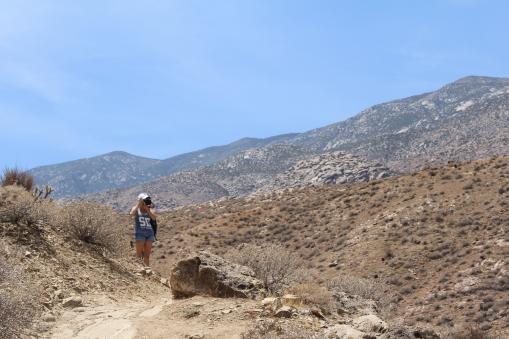
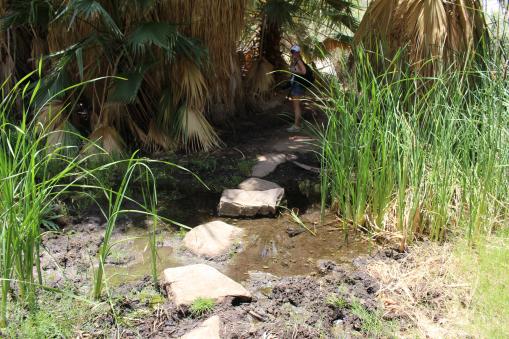
It seems I see life in blues and greens. In the desert I do not see life I see survival.
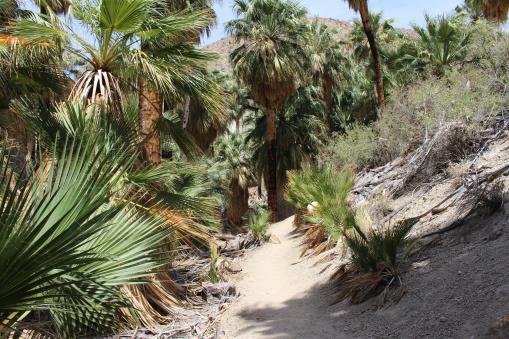
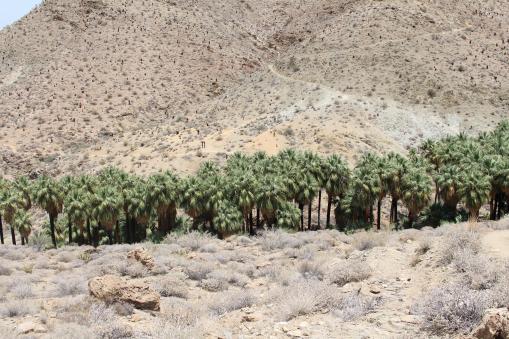
If you are going to vacation in the desert it is only fitting that, to get a real feel for the terrain, you hike it. And hike it Jo and I did. With our cameras in hand we set out to experience Palm Canyon, one of three Indian Canyons located in the Palm Springs area. Palm Canyon is known for it's oasis. Largest native California Fan Palm oasis in the world. Being here in May put us at the beginning of dry season. Waters not flowing and soaring temperatures (100 plus degress) did not deter us. We began our six mile hike with enthusiam and ended it with a touch of heat stroke. Remember, life is an adventure.
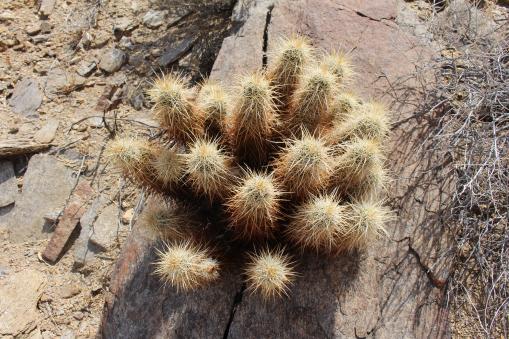
We revelled in the first half mile of our trek. We were treated to the oasis where huge Fan Palm trees provided shade and colour. As we walked the oasis gave way to the starkness of the desert. The world around us became muted. Shades of brown enveloped the views. Our walking path became dusty. The landscape had been sucked dry. Still there was beauty. At least that is what Jo was telling me. Eventually I came around and did my best to see beauty and life in shades of brown. A cactus growing out of a crack in a rock caught my eye. With drops of sweat continuously running down my face I captured a shot of the cactus. The cactus appeared to not only to be surviving but flourishing in this harsh environment. The road runner, jack rabbit and multitude of lizards we saw were thriving too. They had made the desert their home.
Despite thinking we had walked many miles we trekked onto our Stone Pools destination (three miles in). Peering 30 feet down at the large dry stones embedded in parched sand we had to put our imagination caps on. Invisioning a waterfall's cascading water was the first of our challenges. The second being, seeing the swirling cool water at the waterfall's endpoint making it's way around the large eroded boulders. What a sight it would have been.
On our way back, Jo and I marvelled at the dichotomy of desert and oasis. Our elevated vantage point provided us a fantastic view of the contrasting environments. What a marvel. I thought of wanderers being elated when they crested the upteenth hill to the vision of row upon row of palm trees. I imagined the travelers questioning the authenticity as they ran forward to their heaven on earth. I know that Jo and I both appreciated being able to walk back into the shaded, much cooler oasis.
Today Jo and I gained a better appreciation of desert life. With our legs dirty with soot and our body's down at least a few litres of water we smiled at having spent our morning creating new memories.
Life is not just in blues and greens. Life comes in all colours.
ACCOMMODATIONS EXTRAORDINAIRE
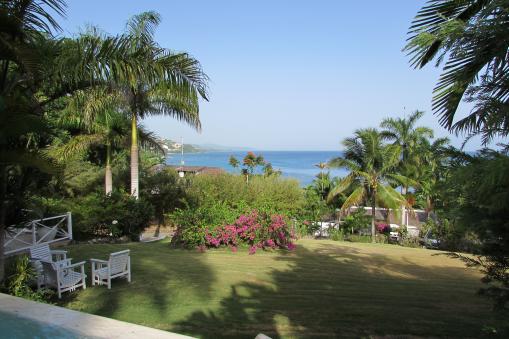
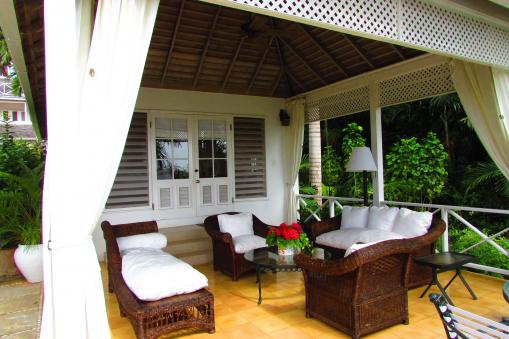
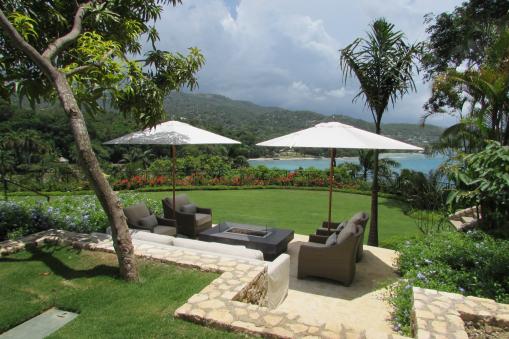
Let me start by saying I was thoroughly impressed with Round Hill Hotel and Villas. A quaint property steeped in history while maintaining a meticulously kept present.
Nestled in the rainforest, 34 gardeners keep this property pristine. Kingsley, longtime hotel guest greeter, showed us to our villa. We were to be in Cottage #1. Sitting on our private patio we looked out onto the Caribbean Sea. Behind us stood our private villa. Any personal tension did not have a chance when pitted against the fresh easy air feel of this place. Strangely, I felt at home.
POWERS COURT HOUSE ESTATE
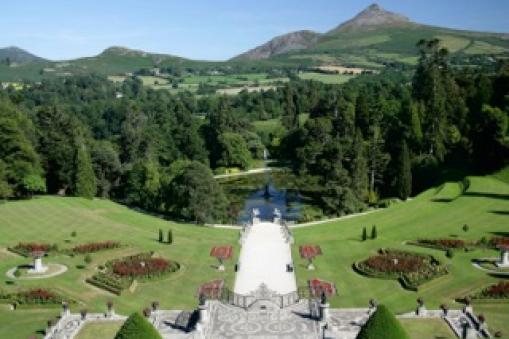
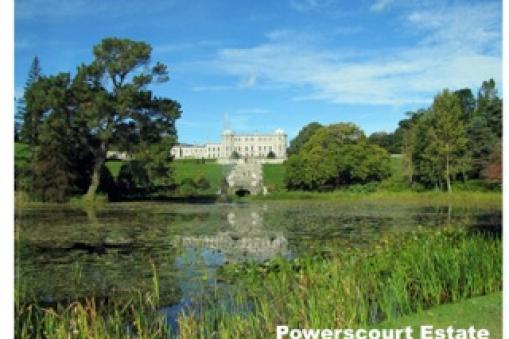
A magnificent expanse. The priceless view captured while standing on the back patio blew me away.
700 acres of meticulously kept gardens. Despite the attention to detail the gardens retain a real sense of nature. I felt a tranqulity and peacefulness even with others milling about the grounds. I will remember the special connection I felt towards this place. And, I will also remember the internal chuckle I had at the thought of ponies being buried in the on-site pet cemetery. The Earl of Wingfield built the Powerscourt House. It was Wingfield's children who insisted on burying their beloved pets on the grounds. Cows, dogs, cats and, yes, ponies were laid to rest here. The gardens have been designed and laid out in an Italian, Japanese and French style. Ireland's best, created during the Victorian era (1858-1875) have been called the 'grand finale' of Europe's formal gardening tradition. Bought in 1974, the Slazenger family now owns the estate.
A piece of Powercourt Estate history - On the grounds is a spectacular waterfall (highest in Ireland). When King George the IV visited the estate the hosts wanted the waterfall to have a more lavish effect. The waterfall was dammed. The idea being that when the water was released there would be a greater cascading effect. Thankfully the king and his entourage spent too long after dinner delving into the wine and sherry. Failing to visit the waterfall saved them from being washed away. For when the dam was removed the cascading water washed away not only the band stand but the viewing area where the king was to be positioned.
STORMONT HONOURS THOSE LOST

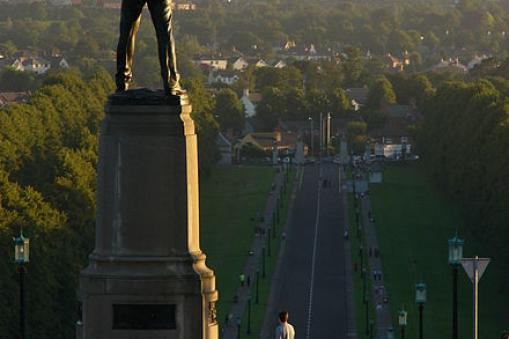
Take a moment. First breath I am weak in the knees. The second is one of amazement.
I stand at the top of the long sloping paved avenue leading to the House of Parliment (Stormont - built in 1928). Gazing about I see a sea of beech trees flanking the avenue. Like soldiers on guard they stand forever proudly. 1520 trees in all. Each one representing a soul lost to the tragic sinking of the Titanic. A supposedly unsinkable ship who stunned the world with her demise on April 15, 1912. The natural monument lends to the character Stormont boasts.
HISTORICAL GLENDALOUGH
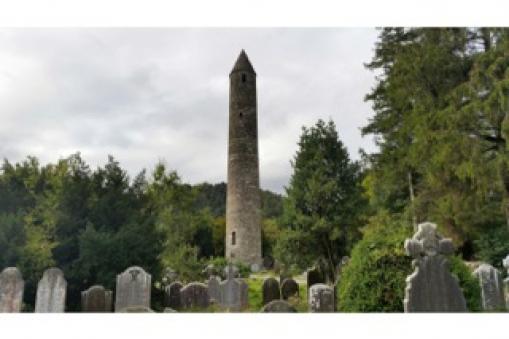
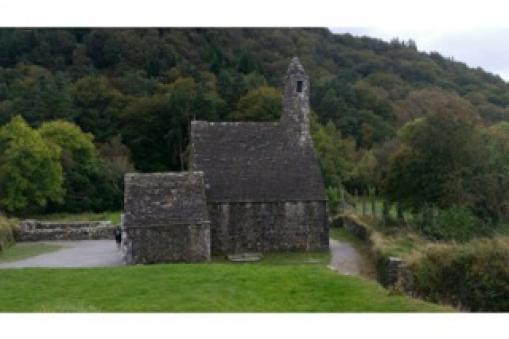
Step back 1200 years in time to when monastatic communities were mainstays of civilization.
Having done this you could find yourself in County Wicklow in the Wicklow mountains. Glendalough, the glen of two lakes, the result of glaciation 200 million years ago. This monastatic settlement, founded by St. Kevin in the sixth century, consists of 7 churches with a round tower calling people to prayer. As the mist hovers, the site is borderline eerie. A shiver tells me I am in a magical yet mysterious place. There is definitely a historical energy here.
It would not be Ireland without a legend associated with Glendalough. For Glendalough the legend shrouds St. Kevin, the Patron Saint of Glendalough. Kevin of the Fair is said to have been so connected to nature that when a bird had laid an egg in his out stretched arm and he stayed like this holding the egg during the incubation period of 21 days until the egg was hatched.